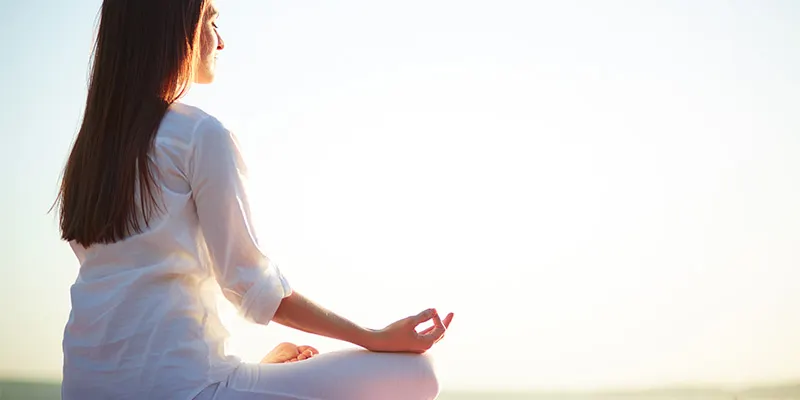
Yoga isn’t only about performing different poses to grow your strength and adaptability. A branch that focuses on other breathing techniques is called Pranayama, which is “the practice of breath control”.
Breathing in a controlled manner helps to balance energy, stabilise your mood, and raise your concentration level by calming your mind and soul. Not only in yoga, but breathing is also essential when performing other exercises. Missing out on this critical step can reduce the effectiveness of your workout.
Here are the 3 most vital yoga breathing techniques you want to include in your workout routine
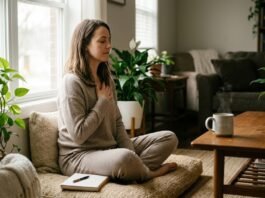
1. Breath focus technique
This deep breathing technique focuses on words and phrases.
You can choose an attention focus that makes you smile, feel relaxed, or have a neutral belief. Examples include peace, let go, or relaxation, but they are often any word that suits you to concentrate on and repeat through your practice.
As you shape up your breath-focused practice, you’ll start with a 10-minute session. Gradually increase the duration until your sessions are a minimum of 20 minutes.
To do it:
- Sit or lie down in a relaxed place.
- Bring your awareness to your breath without trying to vary your breathing.
- Alternate between regular and deep breaths for a couple of minutes. Notice any changes between normal breathing and deep breathing. Notice how your abdomen expands with deep inhalations.
- Note how light breathing feels compared to deep breathing.
- Practice your deep breathing for a few minutes.
- Place one hand below your belly button, keeping your belly relaxed, and see how it rises with each inhale and falls with each exhale.
- Let out a loud sigh with each exhale.
- Begin the practice of breathing for a couple of minutes by combining this deep breathing with imagery and a focused word or phrase to support relaxation.
- You’ll imagine that the air you inhale brings waves of peace and calm throughout your body. Mentally say, “Inhale peace and calm.”
- Imagine that the air you exhale washes away tension and anxiety. You’ll tell yourself, “Exhale tension and anxiety.”
2. Lion’s breathing
Lion’s Breath is an energising yoga breathing practice that’s said to alleviate tension in your chest and face.
It’s understood as Lion’s Pose or simhasana in Sanskrit.
To do it
- Come into a calm and relaxed seated position. You’ll sit back on your heels or cross your legs.
- Press your palms against your knees with all your fingers spread wide.
- Inhale deeply through your nose and open your eyes wide.
- At the same time, open your mouth wide and stick out your tongue, bringing the tip down toward your chin.
- Contract the muscles at the front of your throat as you exhale through your mouth by making a long “ha” sound.
- You’ll turn your gaze to see the space between your eyebrows or the tip of your nose.
- Do this breath 2 to 3 times.
3. Equal breathing
Equal breathing is understood as sama vritti in Sanskrit. This breathing technique focuses on inhaling and exhaling at a similar length. That’s not easy to breathe; smooth and steady can help cause bring about balance and stability.
You should find a breath length that is not too easy or too difficult. You also want it to be too fast so that you’re able to maintain it throughout the practice. Usually, this is between 3 to 5 counts.
Once you get comfortable breathing while seated, you can do it during your yoga practice or other daily activities.
To do it:
- Choose a relaxed seated position.
- Inhale and exhale in and out through your nose.
- Count during each inhale and exhale to ensure they are even in duration. Alternatively, repeat a word or short phrase during each inhale and exhale.
- You’ll add a slight pause for breath retention after each inhale and exhale if you feel comfortable. (Normal breathing involves a natural pause.)
- Continue practising this breath for at least a minimum of 5 minutes.
Conclusion
You’ll try most of these breath exercises right away. Dedicate a positive amount of time at least a few times per week. You can do these exercises throughout the day at any time. You’ll feel relaxed all day.