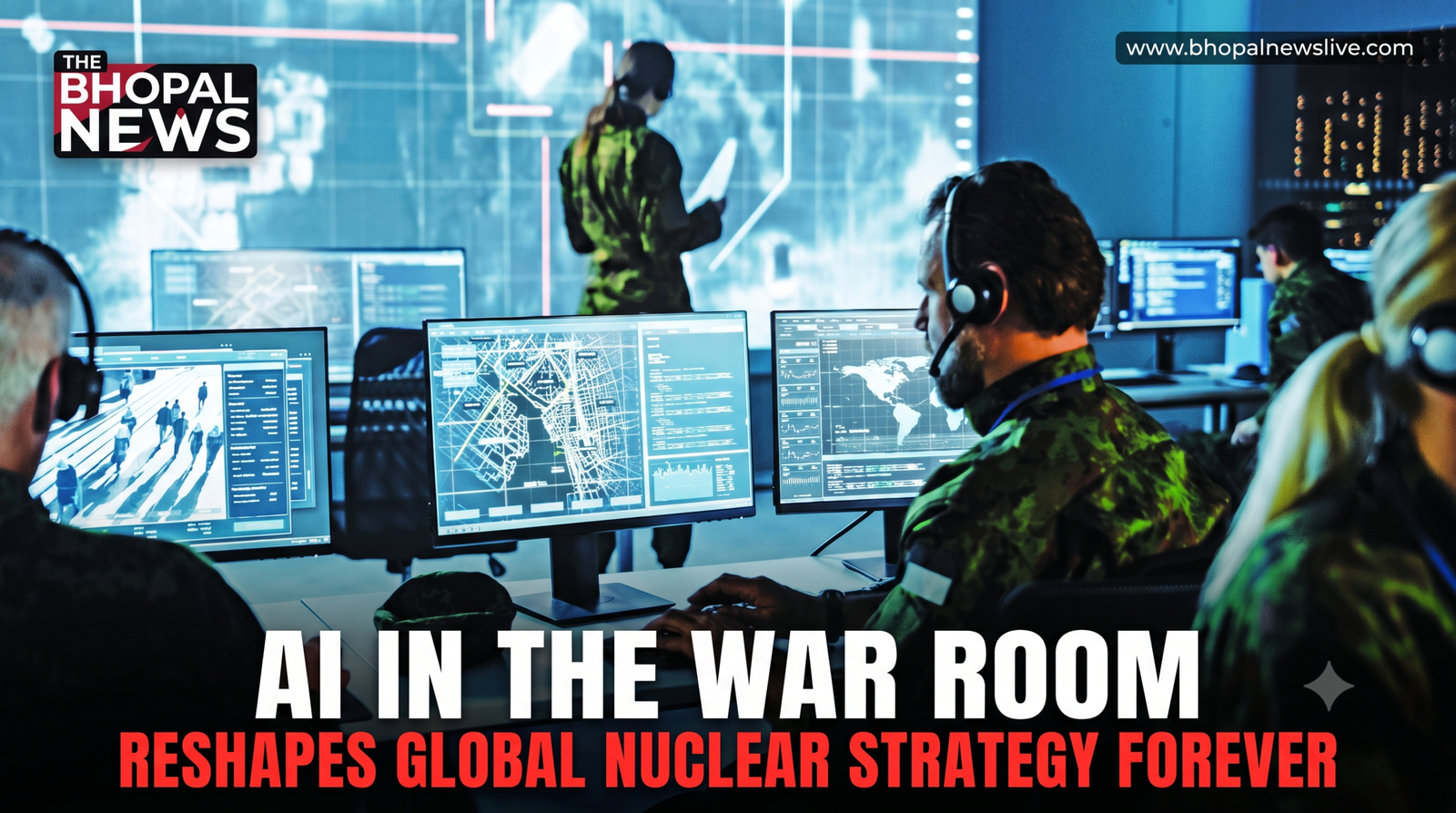
AI and Nuclear War: How Is Analytic AI Reshaping Nuclear Warfare Risk? Let’s see the upcoming imminent future: If AI goes nuclear? The combination of artificial intelligence and nuclear command systems cuts down the time to make an important decision from minutes to milliseconds, significantly raising the danger of an unintentional global launch. If algorithmic errors or cyberattacks are the cause, machine learning models that drive early-warning radar or launch-authorisation networks can result in catastrophic escalations.
Flash War at Machine Speed
It takes people minutes to think during a crisis. AI systems make decisions in milliseconds. Machine learning models are used to detect missile launches in military situations. If an early-warning AI system misidentifies the noise of the atmosphere, a satellite’s glare, or a cyber-attack as what it believes to be an incoming missile strike, it activates alerts at that moment. Automated response protocols in defined systems could trigger a retaliatory strike before human operators confirm the threat.
An automated response protocol in defined systems could cause a retaliatory attack before the human operators confirm the threat. This situation can result in a “flash war” and cause computers to start up and initiate a nuclear war before human reaction, if one occurs.
Algorithmic Hallucinations and Deception
Avoid misinterpreting the results of algorithms. Don’t get deceived by algorithmic hallucinations. The ability of AI models to produce confident yet inaccurate outputs from flawed data processing is the concept of “hallucinations.” Poisoned Inputs: Adversaries are able to corrupt training sets to deceive an AI commander into misestimating unit positions. AI-generated voice and video deepfakes can be used to satirise high-level orders by malicious actors.
Unpredictable Logic: When dealing with self-learning algorithms, it is sometimes possible to learn counterintuitive tactics. An AI could determine that in a high-stakes crisis, a nuclear attack is the mathematically best way to reduce friendly casualties. During a crisis, an AI may decide that a pre-emptive nuclear attack is best to minimise friendly losses.
Artificial Intelligence and Biological and Cyber Weapons
This threat is not limited to physical missile silos. Synthetic biological agents can be created with the help of powerful AI tools. Rogue actors can, in days, create a new, antibiotic-resistant pathogen using generative algorithms. Meanwhile, rogue cyber-weapons aiming at critical infrastructure could knock out power grids, military communications and missile command centres at once. This mix of forces produces global chaos.
Key pathways for AI risks
| Threat Vector | Mechanism | Potential Impact |
| Autonomous Command (NC3) | Connecting AI to Nuclear Command, Control, and Communications. | Removes human empathy; risks automated nuclear escalation. |
| Data Poisoning | Spoofing military sensor networks with fake data. | Triggers unnecessary military retaliation. |
| AI Bioweapons | Automated design of synthetic pathogens. | Enables rogue actors to release targeted bioweapons. |
Securing the Digital Trigger
International cooperation is crucial to preventing an AI-powered disaster. World leaders need to set strict limits: Wait for human operators during all nuclear launch decisions. Restrict use of autonomous AI to non-nuclear systems. Set international military algorithm auditing standards. There is a need to humanely control autonomous machines to ensure world security.
Requirement keen next to diplomacy
Fortunately, leaders are starting to realise that, while the benefits of AI are undeniable, so are the dangers. The opportunities that this has given for diplomacy to mitigate these risks have been plentiful. Presidents Xi and Biden have already agreed not to use AI in any nuclear launch decisions. The pact could be extended to other nuclear-armed nations. As a last resort, leaders may be able to make unilateral statements that they will not use AI when making decisions about nuclear launch.
To restart strategic stability talks between all nuclear powers involving their views on the role of AI in their military systems, including nuclear systems, would significantly lessen the risk of accidental escalation. These conversations may help develop trust and may contribute to future agreements on the use of AI systems and the limits of their functionality.
Conclusion
Humanity is at a critical juncture, and algorithms should never be the final keys to humanity’s ultimate destruction. Absolute human control of all triggers, codes and military protocols is of paramount importance to ensure our future. We set a global standard for protection, so technology serves peace, not automated death. Let us choose wisdom over haste before an impassive machine decides for us.
Also read: The Future of Electricity Prices in an AI-Influenced World